Why Orange County Med Spas Lose Booking Requests to the Map Pack
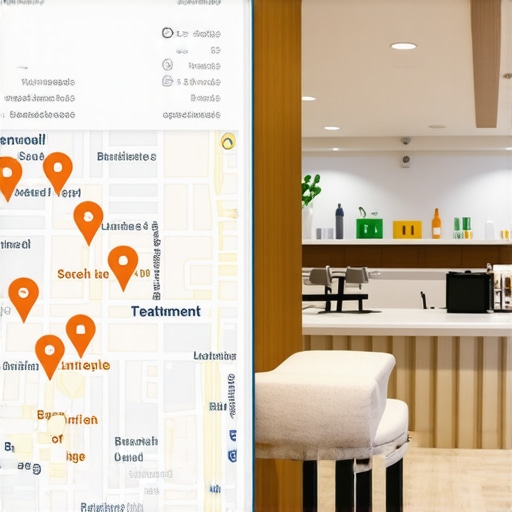
In the high-stakes landscape of Orange County aesthetics, the battle for patient acquisition is no longer fought on the glossy pages of local magazines or even the traditional “blue link” organic search results. As we move through 2026, the digital “front door” for every premier med spa in Anaheim, Irvine, and Newport Beach has shifted entirely to the Google Map Pack. This three-listing block, appearing at the very top of local search queries, is where 80% of local intent now terminates. For many aesthetic practices, the reality is sobering: you may have a million-dollar interior and a high-converting website, yet you remain invisible to the thousands of patients searching for “Botox near me” or “best lip fillers in Orange County” every month.
The “Zero-Click” revolution has fundamentally changed how patients interact with medical providers. Users are no longer interested in navigating through three pages of a website to find a booking button. Instead, they are making split-second decisions based on the proximity, review velocity, and visual authority presented directly within the Map Pack interface. If your med spa is not appearing in those top three positions, you aren’t just losing visibility; you are actively handing over booking requests to competitors who have mastered the art of google business profile seo. To reclaim your market share, you must move beyond generic digital marketing and embrace a systematic, map-first infrastructure.
The Invisible Barrier: Why Your Med Spa Isn’t in the Top 3
The frustration for many Orange County med spa owners is palpable. You can see your office from the 55 freeway, yet your business doesn’t show up on a search performed just two miles away. This phenomenon is driven by the “Big Three” of Google’s local algorithm: Relevance, Distance, and Prominence. While these factors have always existed, their application has become increasingly aggressive. The most common technical hurdle is the “proximity bubble,” a digital geofence that limits your reach based on the searcher’s physical coordinates. You might find that why your Anaheim business pin vanishes when customers drive two blocks away is due to a lack of localized prominence signals that would otherwise allow you to “break” that bubble.
Distance is the hardest factor to manipulate because it is static. However, many med spas fail because they do not maximize Relevance and Prominence. Relevance is determined by how well your Google Business Profile (GBP) matches the specific intent of the searcher. If a patient searches for “CoolSculpting Elite,” but your profile only lists “Med Spa” as a category without specific service menus or updates mentioning that technology, Google will pass you over for a competitor who has meticulously mapped their services. Prominence, on the other hand, is a measure of your brand’s digital “weight.” This is calculated through your review count, your backlink profile, and how often your brand is mentioned across the web in a medical context.
To overcome this invisible barrier, med spas must understand that the Map Pack is a separate entity from organic search. While your website’s SEO matters, it only accounts for a portion of your local ranking. The rest is determined by the health of your GBP and your ability to signal to Google that you are the most authoritative option within a specific radius. Without a dedicated google maps ranking service, most practices find themselves trapped in a local search vacuum, appearing only to people standing in their own parking lot.
The “Visual Trust” Gap: How Photos Drive Bookings
In the aesthetic industry, trust is built through the eyes. Research from leading medical spa owner groups consistently shows that visuals are not merely “fluff” – they are high-impact ranking signals. Google uses sophisticated Image AI (Cloud Vision) to scan the photos you upload to your profile. If you upload a photo of a syringe and a patient’s forehead, Google’s AI identifies the context of “Botox” or “dermal fillers,” which directly boosts your relevance for those specific search terms. This is why a lack of high-quality, frequently updated imagery creates a “Visual Trust Gap” that kills conversions.
Top-performing med spas in Orange County often have 20% more owner-uploaded photos than their lower-ranking competitors. These aren’t just stock images; they are authentic, geo-tagged photos of the facility, the staff, and the actual treatments being performed. Utilizing the specific photo checklist helping OC service shops dominate local map results is essential for bridging this gap. This checklist includes everything from 360-degree virtual tours of the treatment rooms to “behind-the-scenes” shots of the medical directors. Each photo serves as a data point that confirms your legitimacy to both Google and the potential patient.
Furthermore, patient-uploaded photos carry immense weight. When a patient posts a “shelfie” of their post-laser glow or a photo of their newly contoured jawline, Google views this as the ultimate form of social proof. These images are often embedded with location metadata, proving to the algorithm that your business is a hub of activity. Med spas that ignore their visual gallery are essentially operating with a closed storefront in the digital world. By consistently refreshing your visual content, you signal to Google that your practice is active, modern, and worthy of a top-three spot.
The Zero-Click Revolution and the Lead Drain
The “Zero-Click” search is a reality where a user finds all the information they need – phone number, address, reviews, and even a booking link – without ever clicking through to a website. For med spas, this is where the lead drain occurs. If your Map Pack listing is incomplete or lacks a direct “Book Online” button, the patient will simply click the “Call” button on the next listing. This shift in user behavior means that why Orange County shops are ditching standard SEO for local map tactics is becoming the standard strategic pivot for 2026. Traditional SEO, while still valuable for long-form educational content, is too slow for the “near me” searcher who wants a treatment today.
Mobile intent is the primary driver of this revolution. A person sitting in a coffee shop in Newport Beach searching for “hydrafacial” is looking for immediate gratification. They want to see a price, a rating, and a way to secure a spot. If your GBP is optimized, you capture this traffic instantly. If it isn’t, you are invisible. This is why “standard SEO” (focused on backlinks and blog posts) often fails med spas – it focuses on the wrong part of the funnel. The Map Pack is the bottom of the funnel, where the actual transaction begins.
To stop the lead drain, med spas must treat their GBP as their secondary website. This includes utilizing the “Products” and “Services” sections to their fullest extent. You should have every treatment – from Microneedling to Kybella – listed with a description and a call-to-action. By providing this information directly in the search results, you reduce the friction of the booking process, ensuring that you are the one capturing the “Zero-Click” lead rather than losing it to the clinic down the street.
3 Specific Fixes for Ghosted Med Spa Profiles in 2026
If your profile feels “ghosted” – meaning you have reviews and a location but no calls are coming in – you likely have technical optimization errors. In 2026, Google’s local algorithm is more discerning than ever. Here are three specific fixes to implement immediately:
- Category Dilution: Many med spas make the mistake of selecting 10+ categories in hopes of showing up for everything. This actually dilutes your authority. Your primary category should be “Medical Spa.” Your secondary categories should be limited to 3-4 highly relevant ones like “Skin Care Clinic” or “Laser Hair Removal Service.” Over-categorization confuses the algorithm and can lead to a drop in rankings for your core services.
- Attribute Optimization: Google provides specific attributes that can help you win niche searches. Attributes such as “Identified as women-led,” “Wheelchair accessible,” or “Appointment required” are more than just labels; they are searchable filters. In a competitive market like Orange County, these small details can be the tie-breaker that puts you in the top 3 for a specific demographic.
- Review Velocity vs. Quality: Having 500 reviews from three years ago is less valuable than having 10 fresh, keyword-rich reviews from the last month. Google prioritizes “Review Velocity” – the rate at which you acquire new feedback. Furthermore, reviews that mention specific treatments (e.g., “The Botox results from Dr. Smith were amazing”) act as unstructured citations, strengthening your relevance for those terms.
Implementing these fixes requires a proactive approach. You cannot simply “set it and forget it.” Utilizing a professional google maps ranking service can help automate the monitoring of these factors, ensuring that your profile remains compliant with the latest algorithmic shifts. When you treat your profile as a living asset, the “ghosting” ends, and the booking requests begin to flow again.
Beating the “Proximity Filter” in Orange County
Orange County is a dense cluster of high-end suburbs, which makes the “proximity filter” particularly brutal. If your med spa is in Anaheim, you may find it nearly impossible to rank in Irvine or Huntington Beach without a specific strategy. To expand your “ranking radius” and beat the filter, you must build local prominence that outweighs the distance factor. This involves more than just having a physical address; it requires a “hyperlocal” content strategy that connects your practice to the surrounding communities.
One of the most effective ways to do this is through local citations and community-specific landing pages that are linked from your GBP posts. For example, creating content about “The Best Post-Treatment Skincare for the Orange County Climate” or sponsoring local events in Anaheim Hills can create the digital signals Google needs to see. You should also check out Anaheim SEO: 3 Fixes to Beat the 2026 Map Filter for a deeper dive into the technical nuances of radius expansion. The goal is to prove to Google that your “authority” is relevant to a wider geographic area than just your immediate street block.
Leveraging local seo tools is also critical for tracking your “geogrid” rankings. These tools allow you to see exactly where your ranking drops off, street by street. If you notice your visibility dies as soon as you cross into a neighboring zip code, that is your signal to increase your citation volume and local PR in that specific area. By systematically attacking these “dead zones,” you can slowly expand your reach, ensuring that your med spa is the top choice for patients across the entire county, regardless of their starting point.
Conclusion: A Systematic Approach to Growth
The transition from a “website-first” to a “map-first” marketing strategy is no longer optional for Orange County med spas – it is a requirement for survival. The Map Pack is where your potential patients are making their decisions, and if you are not present, you are essentially invisible. As Sierra Lavallee, a leading strategist in the field, often says: “Medical professionals deserve systematic, research-backed solutions that deliver predictable growth. You shouldn’t have to guess why your phones aren’t ringing; the data is all there in the Map Pack.”
To reclaim your lost bookings, you must view your Google Business Profile not as a static listing, but as a dynamic engine for patient acquisition. This means focusing on the “Big Three” of ranking factors, closing the visual trust gap, and aggressively managing your review velocity. It means understanding the “Zero-Click” environment and making it as easy as possible for a patient to go from “search” to “scheduled” in under sixty seconds.
If you are tired of seeing your competitors dominate the local landscape while your practice sits on page two, it is time for a change. Start by performing a comprehensive google business profile audit to identify the gaps in your current strategy. From there, build a “Map Pack Battle Plan” that focuses on long-term prominence and technical excellence. With the right infrastructure in place, you can turn the Google Map Pack from a source of frustration into your most powerful tool for predictable, sustainable growth in the Orange County aesthetic market.