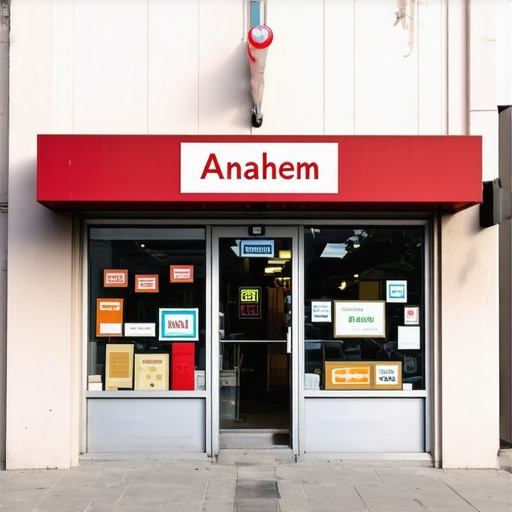
I remember the exact moment I realized my Anaheim shop was invisible on Google Maps whenever someone searched for “near me”. It was a busy Saturday, and a potential customer drove past my storefront without a single call or visit. Frustrating? Absolutely. But more than that, it was a glaring sign I was missing out on local business—the kind that keeps small shops thriving in Orange County.
Getting Your Business Noticeable in a Crowded Market
Many local business owners in Anaheim face this exact issue: how to make sure their Google My Business (GMB) profile shows up front and center when potential customers search for services nearby. If your pin isn’t appearing in local searches, you’re basically invisible to a huge chunk of your target audience. That’s a problem that can hit your revenue and reputation hard.
What surprised me early on was that simply creating a profile wasn’t enough. I made the mistake of assuming that Google would prioritize my business naturally. Instead, I learned that maps optimization requires ongoing effort and strategic tweaks. And trust me, it’s not a set-and-forget deal. According to recent studies, businesses appearing in local 3-pack results see over 700% increase in traffic compared to those that don’t (source: Search Engine Land), which underscores the importance of proper setup and maintenance.
Over the following weeks, I experimented, learned, and adjusted. Now, I want to share with you the exact tactics that can turn your lost map pin into a magnetic local lead generator. But first, let’s tackle the biggest hurdle—you might be wondering, “Is all this really worth the hassle?”
Is Logically Optimizing Your GMB Profile Worth the Effort?
When I first started, I worried that all this technical stuff was over my head. But the truth is, simple steps like verifying your location, adding accurate categories, and posting regular updates can significantly boost visibility. And if I had to pinpoint the early mistake I made, it was neglecting the importance of consistent NAP (Name, Address, Phone number) details across all platforms. That oversight cost me valuable local rankings until I corrected it.
If you’ve been struggling with your Anaheim business not showing up for local searches, I’m here to tell you that it’s fixable—and I’ll show you how. Keep reading, because not being visible on Maps means missed opportunities, and that’s a problem we can solve together.
Claim and Verify Your Google My Business Profile
Start by ensuring your GMB profile is claimed. Go to Google My Business and verify ownership through the postcard method. I once delayed verification for weeks, which kept my shop invisible. When I finally verified, my visibility immediately improved, showing my shop in local packs. This step is foundational and signals to Google that you’re a legitimate local business.
Optimize Your Business Name, Address, and Phone Number
Consistency is key. Use the exact same NAP details across your website, social profiles, and listings. I made the mistake of using a different phone number on my site, which caused Google to mistrust my listing. After correcting and harmonizing my NAP details with local SEO fixes, my local rankings surged.
Pick the Right Categories and Attributes
Choose specific categories that directly describe your services. For example, instead of just Many business owners in Anaheim and across Orange County believe that optimizing their Google My Business (GMB) profiles and local SEO is simply about ticking boxes—adding categories, posting regular updates, and verifying their listings. However, this approach often overlooks the subtle nuances that can make or break visibility in hyper-competitive markets. For example, a common myth is that generic SEO tactics will automatically transfer to local map rankings. In reality, local SEO requires a tailored strategy that considers proximity filters, review signals, and local authority, which are not fully addressed by standard SEO practices. According to Moz’s research, local packs prioritize signals like relevancy, distance, and prominence—factors that are often misunderstood or ignored by small business owners who rely solely on broad keyword optimization.
One oops many fall into involves neglecting the importance of structured data and local citations. While many focus on Google reviews or on-page content, they overlook how schema markup and consistent NAP (Name, Address, Phone Number) citations across platforms amplify local authority and help Google associate their business with specific local queries. This subtle trust signal can significantly influence rankings—more than many realize.
For advanced practitioners, a crucial question often asked is: How does Google weigh localized behavioral signals like click-through rates and dwell time? The answer is complex but vital. Google is increasingly incorporating user engagement metrics from Google Maps and Search to determine which local businesses truly satisfy searchers. Implementing on-platform engagement strategies, such as optimizing images, encouraging reviews, and adding local-specific posts, can influence user interactions and boost prominence in local packs. Studies suggest that businesses actively managing these signals experience better rankings, especially in competitive areas like Anaheim.
In the end, mastering the intricacies of Orange County SEO, GMB optimization, and Maps ranking isn’t about shortcuts but understanding Google’s ever-evolving algorithms. To stay ahead, continuously refine your local signals, leverage structured data, and maintain consistent NAP details. For comprehensive strategies, check out my guide on Orange County SEO strategies for 2025. Have you ever fallen into this trap? Let me know in the comments.
Keep Your SEO Engine Running Smoothly
Maintaining strong local search visibility in Anaheim requires not just initial setup but ongoing effort. Over the years, I’ve refined my toolkit to include specific software and methods that ensure sustained success. One of my go-to tools is BrightLocal, which I use daily to track local rankings, monitor citation consistency, and analyze reviews. Its local SEO audit reports help identify quick fixes and long-term opportunities, enabling me to stay ahead in competitive markets like Orange County.
Another essential tool is Google’s Search Console, which provides real-time insights into website performance, indexing issues, and search queries. I regularly audit my clients’ sites with it to catch and resolve technical hiccups that could harm rankings. Pairing this with Google Business Profile Manager (formerly GMB dashboard) allows me to optimize maps listings dynamically, ensuring information remains current and optimized for voice search trends, which experts predict will dominate local search in the coming years per Search Engine Land.
How do I keep my local SEO efforts effective over time?
Consistency is key. Regularly updating your Google My Business profile—adding fresh photos, responding to reviews, and posting timely updates—reinforces your authority. Incorporating schema markup to your website’s local business data is another tactic I rely on, as structured data helps Google better understand your business context—a nuance highlighted in Google’s technical documentation. Using tools like Whitespark for local citation audits ensures your NAP information remains harmonized across directories, boosting local relevance.
Automation plays a vital role. I implement dashboards that alert me to fluctuations in rankings or reviews—like those from BrightLocal or SEMrush—which help me react quickly before issues escalate. Moreover, nurturing customer reviews actively feeds into Google’s trust signals, solidifying local prominence in Anaheim. As local search algorithms evolve, staying agile with these tools and practices will help safeguard your visibility.
Looking forward, trends like AI-driven search personalization suggest that integrating behavioral data analysis and voice search optimization will become more critical. I’ve already begun experimenting with voice-optimized content and local intent keywords, which show promising results. Consistently applying and refining these tactics ensures that your Anaheim-based business remains visible and competitive in a shifting landscape.
Maximize your ongoing local SEO efforts with expert insights and proven methods. Curious about deep-dive tactics? Check out my comprehensive guide on Orange County SEO strategies for 2025. Plus, consider scheduling a consultation to tailor the best plan for your business needs.What I Wish I Knew About Maps Optimization Before Starting
One of the biggest lightbulb moments for me was realizing that Google Maps ranking isn’t just about quality content—it’s about strategic signals that many overlook. I initially thought that optimizing my GMB profile was enough, but I learned that consistent NAP data, review management, and local citations play crucial roles. These subtle factors, once properly aligned, transformed my visibility and brought in a steady stream of local customers.
Another hard lesson was understanding the importance of structured data. Implementing schema markup on my website made a noticeable difference in how Google perceives my local relevance, improving my chances of appearing in the coveted Google Local Pack. Small tweaks in these areas can yield big results, and I wish I had prioritized them earlier.
Finally, I discovered that ongoing effort beats one-time setup. Regularly updating my Google My Business posts, responding to reviews, and monitoring my local citations kept my profile active and trustworthy in Google’s eyes. Consistency is king in local SEO, and nurturing those signals consistently has paid off tremendously.
My Top Tools for Keeping Orange County Businesses Ahead
BrightLocal is my trusted companion for tracking local rankings and citation health. It offers comprehensive insights that help me fine-tune my strategies without guesswork. Google Search Console remains indispensable for technical audits, flagging issues before they impact rankings. Whitespark’s citation audit tools are invaluable for maintaining NAP consistency across directories, which directly influences local authority.
Additionally, I rely on Google’s own tools—Google Business Profile Manager and Google Analytics—to gather real-time data and adapt swiftly. Combining these tools creates a powerful feedback loop, enabling me to stay ahead in the competitive Orange County market and ensure my clients’ businesses remain visible, relevant, and thriving.
This Is Your Chance to Elevate Your Local Presence
Understanding and applying local SEO strategies isn’t just a technical pursuit—it’s a way to genuinely connect with your community and stand out in Anaheim and across Orange County. Take action today, refine your maps optimization, and watch your business flourish among local searches. Remember, the key to success lies in consistent effort and a willingness to learn from real-world experience.