How to Spot Exactly Where Anaheim Competitors Are Stealing Your Map Clicks
If you are a business owner in Anaheim, you likely check your rankings occasionally. You search for your primary service, see your business in the top three of the local map pack, and breathe a sigh of relief. But here is the cold, hard truth from a technical perspective: that single search is lying to you. In the world of google business profile seo, your ranking is not a static trophy; it is a hyper-local battlefield that changes from street to street, block to block.
As the Co-Founder of Wiideman Consulting Group, I have spent years performing forensic audits on local search ecosystems. What we often find is an “invisible thief.” While you might appear at #1 when sitting in your office near the Platinum Triangle, you might be completely invisible to a customer searching from a hotel near Disneyland or a residential neighborhood in Anaheim Hills. When your phone stops ringing despite “good rankings,” it is because a competitor has identified your “dead zones” and is actively siphoning off your leads. To reclaim your territory, you need more than basic tips – you need a professional-grade audit to identify exactly where and why you are losing visibility.
To stay competitive, you must utilize advanced local seo tools to visualize your reach. In this guide, I will break down the technical maneuvers your competitors are using to suppress your profile and show you how to fight back. For a deeper dive into the local landscape, check out our guide on Anaheim SEO Secrets: Boost Your Local Rankings Today.
The “Ghost Pin” Scam & Malicious Competitor Edits
One of the most insidious ways Anaheim competitors steal your map clicks is through a tactic I call the “Ghost Pin” scam. Research from groups like Merchynt has highlighted a massive uptick in malicious use of Google’s “Suggest an Edit” feature. Because Google aims to crowdsource accuracy, they often trust “Local Guides” or even anonymous users over the business owner themselves.
Here is how it works: A competitor (or a low-quality SEO agency they hired) visits your Google Business Profile (GBP) and clicks “Suggest an edit.” They then select “Change name or other details” and subtly move your map pin. They won’t move it miles away – that would trigger an immediate red flag. Instead, they move it to the middle of a nearby park, a residential cul-de-sac, or even a different suite number in a large complex.
This “Ghost Pin” move accomplishes two things. First, it confuses Google’s proximity algorithm. If Google thinks your office is actually in the middle of Pearson Park rather than on a commercial corridor, your relevance for “near me” searches in that immediate area tanks. Second, it can trigger a verification loop or a suspension.
The Dangerous Dashboard Trap
Most business owners, upon noticing their pin is wrong, immediately log into their GBP dashboard and drag it back. Do not do this. Manually moving your pin in the dashboard is one of the highest-risk activities for triggering an automatic suspension. Google’s AI often views sudden location changes from the owner as a sign of fraud.
The “Unlinked Account” Fix
To fix a malicious pin move safely, you should use an “unlinked account.” Have a trusted employee or a friend use their personal Google account – one not associated with your business management – to “Suggest an edit” and move the pin back to the correct location. Google is far more likely to accept a “community” correction than a sudden change from a business owner who they suspect might be trying to game the system. If you’ve already been hit by a penalty, read our technical walkthrough on The Only Way to Fix a Suspended Anaheim Business Profile Without Losing Your Reviews.
Visualizing the Battlefield: Geogrid Tracking
To rank google business profile listings effectively, you have to stop thinking about Anaheim as one single location. To the Google algorithm, Anaheim is a collection of thousands of tiny data points. Standard SEO tools that give you a single “ranking” for a city are functionally useless for local maps.
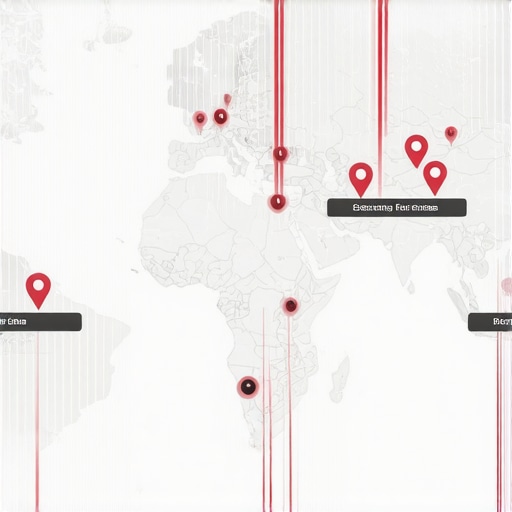
This is where geogrid technology comes in. A geogrid tool (like Local Falcon or Local Dominator) places a grid – usually a 13×13 or 15×15 matrix – over a specific geographic area. It then runs a search for your keywords at every single “node” on that grid.
The Platinum Triangle vs. Harbor Blvd
Imagine you run a plumbing company. Your geogrid might show you at #1 for “plumber” when the searcher is on Harbor Blvd. However, as you move toward the Anaheim Convention Center, your ranking might drop to #5. By the time the searcher reaches the Platinum Triangle, you might be at #12.
When you see this visually, you can identify your “ranking dead zones.” If a competitor is ranking #1 in an area where you are #10, you can begin to investigate *why* they have more authority in that specific neighborhood. Is it because they have more reviews from customers in that zip code? Do they have local backlinks from organizations in that part of town? You cannot fix what you cannot see. To get a clear picture of your current standing, you need a high-quality google maps rank tracker to map out your visibility. For more on this, see How to see exactly where your map pin disappears in Orange County search.
The Three Pillars of Map Theft: Proximity, Relevance, and Prominence
To understand how competitors are stealing your clicks, you must understand the three pillars of the Google local algorithm. When a competitor outranks you, they are winning in one (or all) of these categories.
- Proximity: This is the distance between the searcher and your business. While you can’t move your building, competitors often “steal” proximity by setting up virtual offices or using the home addresses of employees to create multiple service area profiles. This is against Google’s Terms of Service, and identifying these “fake” locations is a key part of reclaiming your rankings.
- Relevance: Does your profile match what the user is looking for? Competitors often win here by using “hidden” categories. If you are a “Lawyer,” but your competitor is listed as a “Personal Injury Attorney,” they will crush you for specific, high-value searches.
- Prominence: This is essentially your “fame” in the eyes of Google. It is built through citation consistency, review signals, and local backlinks. If a competitor is mentioned on the Anaheim Chamber of Commerce website and you aren’t, they have a prominence advantage.
If you find that your reach is limited to a very small radius, you are likely suffering from a lack of prominence. You can learn more about this in our article, Why your phone stops ringing when you drive 5 miles from Anaheim.
Competitor Reconnaissance: What Are They Doing Better?
If you want to improve google maps ranking, you have to perform a forensic audit of the top three competitors who are currently sitting in your spots. Don’t just look at their profiles; look at the data behind them. Use a google business profile audit tool to pull the following data points:
1. Primary Category Audit
This is the most common mistake I see. Google allows one primary category and up to nine secondary categories. The primary category carries about 75% of the ranking weight. If your competitor is using “Water Restoration Service” while you are using “Plumber,” they will win the high-value emergency restoration clicks every time. Check the source code of their GBP or use a browser extension to see exactly which primary category they have selected.
2. Review Velocity and Sentiment
It isn’t just about the total number of reviews; it’s about the “velocity” – how fast they are getting them. If your Anaheim competitor is receiving five reviews a week and you are receiving one a month, Google perceives their business as more “active” and relevant. Furthermore, look at the keywords within their reviews. Are their customers mentioning specific Anaheim neighborhoods? This builds local relevance that Google loves.
3. The Photo Engagement Trick
Photos are a vastly underrated ranking signal. Google uses Cloud Vision AI to “read” your photos. If a competitor is uploading geo-tagged images of their trucks in front of recognizable Anaheim landmarks, Google’s AI confirms their physical presence in the city. If your profile only has stock photos or interior shots, you are losing the “location authority” battle. To see a full breakdown of how to beat them, read How to see exactly why your Anaheim competitors are still outranking you.
The 2026 Map Update: Staying Ahead of the Filter
As we look toward the future of local seo for small business, Google is becoming increasingly sophisticated in how it filters results. We are seeing a massive shift toward “Local Justifications.” You’ve likely seen these in search results: a small snippet that says “Their website mentions [Service]” or “Reviewers mention [Keyword].”
In 2026, the “filter” is getting tighter. Google is starting to hide businesses that don’t have “social proof” of their services on their actual website. If your GBP says you offer “AC Repair,” but your website doesn’t have a dedicated, high-quality page about AC repair in Anaheim, Google may filter you out of the map pack in favor of a competitor who has that content alignment. This is no longer just about your profile; it is about the “entity” of your business across the entire web. For a roadmap on future-proofing your business, see How Anaheim Local Shops Beat the 2026 Map Update [5 Fixes].
Conclusion: Reclaim Your Anaheim Market Share
Losing map clicks in Anaheim isn’t an accident; it’s the result of competitors being more proactive with their google maps competitor analysis and profile optimization. Whether it’s through malicious “Suggest an Edit” tactics, superior category selection, or better geogrid coverage, the data is there for you to find.
Stop letting competitors steal your Anaheim leads. The first step is to stop guessing where you rank and start seeing the data. Perform a manual audit of your top competitors today, check your primary categories, and use professional tools to see your real geogrid ranking. If you aren’t visible in the Platinum Triangle or Anaheim Hills, you are leaving money on the table.
Audit your profile today or contact our team for a deep-dive analysis. The map pack is the most valuable real estate in digital marketing – it’s time you claimed your share of it.