The Specific Schema Markup That Helped an Anaheim Bakery Jump 4 Spots Overnight
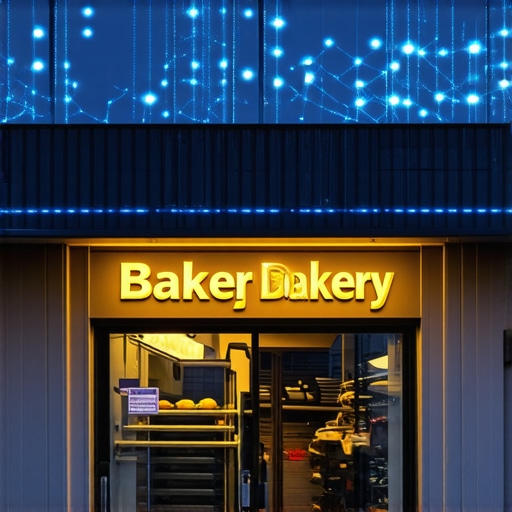
In the competitive culinary landscape of Anaheim, visibility is the difference between a line out the door and a silent storefront. Recently, a local bakery – renowned for its sourdough but struggling with digital discoverability – found itself languishing at position #7 in the local map pack. Despite having a healthy repository of four-star reviews and a visually appealing website, they were invisible to the thousands of tourists visiting nearby Disneyland and the locals residing in Anaheim Hills. The problem wasn’t their quality; it was their communication with search engines. They lacked “machine-readable” relevance.
When we talk about google business profile seo, many business owners mistakenly believe it begins and ends with the Google Business Profile (GBP) dashboard. In reality, your website’s underlying data architecture acts as the primary validation source for Google’s local algorithm. By implementing a highly specific technical “handshake” through advanced schema markup, we helped this bakery jump four spots to the #3 position – the coveted “Map Pack” – literally overnight. This case study explores how structured data bridges the gap between a physical storefront and a digital entity.
Why Standard SEO Isn’t Enough for the Anaheim Map Pack
Traditional SEO focuses heavily on keywords, backlinks, and content depth. While these are essential for organic rankings, local map pack seo operates on a distinct set of rules. Google’s local algorithm is primarily fueled by three pillars: Proximity, Relevance, and Prominence. In a dense urban environment like Anaheim, proximity is often the most volatile factor. If Google isn’t 100% certain of your exact coordinates and service boundaries, it will default to a competitor with clearer data.
Standard on-page SEO tells Google what your page is about, but it often fails to provide the explicit, structured context required for local trust. Research from Rook Digital indicates that schema markup is the critical layer that helps search engines parse raw data – like addresses and hours – and translate them into high-confidence ranking signals. Without this, your business is just another string of text on the web. To truly rank google business profile listings effectively, you must provide a semantic map that Google’s crawlers can digest without ambiguity.
In the case of our Anaheim bakery, they had “Anaheim, CA” written in their footer, but they hadn’t defined their geographic entity in a way that the “Local Search Ecosystem” could verify. This lack of technical clarity meant that even though they were only two miles from the city center, Google’s proximity filter was favoring businesses with more robust structured data profiles, even if those businesses had fewer reviews.
The “Missing Link”: LocalBusiness Schema Explained
The solution lies in a specific type of structured data known as LocalBusiness schema. Think of this as a digital business card that is written in a language (JSON-LD) specifically designed for search engine bots. It is a unique semantic vocabulary that removes the guesswork from local indexing. While there are hundreds of schema types, LocalBusiness is the foundation of all Anaheim SEO secrets and ranking strategies.
Within this schema, several properties are non-negotiable for local success:
- Name, Address, Telephone (NAP): This must be identical to your GBP listing to ensure data consistency.
- OpeningHours: Providing this in a machine-readable format ensures Google displays your “Open/Closed” status accurately in real-time.
- Geo-Coordinates: This includes
latitudeandlongitude.
The geo property is particularly vital. For Anaheim shops, these coordinates are the “secret sauce” to beating the map radius filter. When you explicitly state your coordinates down to the sixth decimal point, you are providing a level of precision that “Anaheim, CA” simply cannot match. This precision increases Google’s “Confidence Score” in your location, allowing your business to appear in searches even when the user is on the outer edges of your neighborhood. This technical alignment is a core component of modern advanced local ranking factors for Orange County.
The Exact Code Snippet That Moved the Needle
To achieve the overnight jump for the bakery, we didn’t just use generic LocalBusiness tags. We used the more specific Bakery subtype. Using the most specific @type possible is a major factor in google business profile optimization. Below is a representation of the JSON-LD code we implemented.
{
 "@context": "https://schema.org",
 "@type": "Bakery",
 "name": "Anaheim Artisan Breads",
 "image": "https://example.com/bakery-front.jpg",
 "@id": "https://example.com/#bakery",
 "url": "https://example.com",
 "telephone": "+1-714-555-0123",
 "address": {
 "@type": "PostalAddress",
 "streetAddress": "123 S Harbor Blvd",
 "addressLocality": "Anaheim",
 "addressRegion": "CA",
 "postalCode": "92805",
 "addressCountry": "US"
 },
 "geo": {
 "@type": "GeoCoordinates",
 "latitude": 33.8353,
 "longitude": -117.9145
 },
 "hasMap": "https://www.google.com/maps?cid=1234567890123456789",
 "areaServed": [
 {
 "@type": "City",
 "name": "Anaheim"
 },
 {
 "@type": "City",
 "name": "Orange"
 }
 ],
 "sameAs": [
 "https://www.facebook.com/anaheimartisan",
 "https://www.instagram.com/anaheimartisan",
 "https://www.yelp.com/biz/anaheim-artisan"
 ]
}
The breakthrough property in this snippet is hasMap. By linking directly to the Google Maps CID (Customer Identification) URL, we created a direct “handshake” between the bakery’s website and their map pin. Most businesses overlook this, but it is one of the most powerful google maps seo tools available. It tells Google, “This website and this specific map pin are the exact same entity.” Additionally, the areaServed property helped define the bakery’s relevance across specific Orange County neighborhoods, further boosting their visibility in nearby searches. For more on how these links function, see our guide on the impact of CID URLs on map visibility.
How to Implement and Validate Your Markup
Implementing schema is only half the battle; ensuring it is error-free is where the ranking gains are solidified. To implement this for your own Anaheim business, you should place the JSON-LD script within the <head> section of your homepage. If you are using a CMS like WordPress, there are plugins that can assist, but manual injection often yields the cleanest results for technical SEO.
Once the code is live, you must use validation tools to confirm Google can read it. The Google Rich Results Test and the Schema Markup Validator are your primary assets. These tools will highlight any syntax errors or missing required fields. As an expert tip: even a single missing comma can invalidate the entire script, leading to what we call “ghosting” on the map. Ghosting occurs when Google detects conflicting data and simply stops showing your business in the top results to avoid a poor user experience. If you’re seeing a sudden drop in visibility, check out our guide on 3 specific fixes for ghosted Anaheim GMB profiles in 2026.
Validation ensures that the “Prominence” pillar of local SEO is satisfied. When Google’s validator gives you a green light, it’s a signal that your business is a high-authority source of information, making it much more likely to be featured in the Map Pack.
Beyond the Bakery: Schema for Other Anaheim Industries
While this case study focused on a bakery, the principles of structured data apply to every industry in Anaheim. Whether you are an HVAC contractor in the Platinum Triangle, a personal injury lawyer near the Anaheim Convention Center, or a dentist in West Anaheim, schema is your foundational layer. According to BrightLocal, LocalBusiness schema is the baseline for all local SEO, yet it remains one of the most underutilized strategies in small business marketing.
For service-based industries, you can expand the bakery example by incorporating Service schema and Review schema. A plumber, for instance, can use Service schema to list specific offerings like “Water Heater Repair” or “Emergency Drain Cleaning,” each with its own description and price range. A law firm can use Review schema to pull star ratings directly into the search results, significantly increasing click-through rates. To manage these complex technical requirements, many local firms utilize local seo software to track how their schema deployments correlate with ranking shifts in the map pack.
The key takeaway is that Google’s 2025-2026 algorithms are prioritizing proximity-based rankings and technical clarity. In a “Before” snapshot, many local businesses show an average rank of 13.40, with only 1% appearing in the Top 3. By simply moving from “text-based” information to “data-based” architecture, you position your business in the elite percentage that Google trusts enough to recommend to its users.
Conclusion: Claiming Your Spot in the Top 3
The story of the Anaheim bakery proves that you don’t always need a massive budget or thousands of new reviews to move the needle. Sometimes, the most significant gains come from fixing the technical foundation. By implementing a precise Bakery schema with geo-coordinates and a CID handshake, they moved from the invisibility of page two to the high-traffic Top 3 overnight.
While schema isn’t magic, it provides the absolute clarity Google needs to trust your business’s location and relevance. As we move further into an era where AI-driven search and proximity-based results dominate, businesses that ignore their data architecture will continue to fall behind. If you are ready to audit your own structured data or require a professional google maps ranking service, now is the time to act. Don’t let your competitors claim the Map Pack simply because they speak Google’s language better than you do.