David Lee
I remember the exact moment I realized I was missing out on a flood of local leads—standing in my office, staring at my screen, watching potential customers pass by my Google My Business profile like ghostly shadows. It hit me hard: I was making fundamental SEO mistakes just because I thought I knew what I was doing. That lightbulb moment changed everything, and I want to share those revelations with you.
Why Most Local Businesses Are Unaware of Their SEO Blind Spots
Here’s the truth: even seasoned entrepreneurs often overlook crucial SEO pitfalls, especially in the ever-evolving landscape of 2026. I’ve seen countless local shops and service providers pour money into generic strategies, only to see their visibility fade faster than they imagined. The sad part? These mistakes are hidden in plain sight, sabotaging your efforts without you realizing it.
What makes these mistakes so deadly? They quietly erode your local prominence, shrinking your visibility and dwindling your leads. In my early days, I was guilty of ignoring major shifts in Google Maps’ algorithms and relying on outdated tactics. Believe it or not, Google reports that 78% of local mobile searches lead to offline purchases—meaning these mistakes could be costing your business a significant chunk of revenue if left uncorrected (Google SEO Blog, 2024).
Is Flawed Maps Optimization Sabotaging Your Business?
Admittedly, I made a big mistake early on—assuming that just having a GMB profile was enough. Spoiler: it’s not. You might be overlooking simple tweaks that make your profile pop up first when your neighbors search for your services. If you’re like me, you’ve probably experienced the frustration of watching your competitors climb the ranks while your profile stagnates.
Let me ask: have you noticed your phone calls dwindling despite good reviews and a decent website? If so, you’re not alone. But here’s the good news: fixing these problems is easier than you think, and that’s exactly what we’re about to tackle next.
Stay tuned as we dive into practical, proven tactics to uncover and fix these hidden local SEO mistakes—starting with the most overlooked factors that could be hurting your business right now.
Prioritize NAP Consistency Across Every Platform
Your Name, Address, and Phone Number (NAP) must be uniform everywhere—the words, formatting, and details. In my case, I once discovered a typo in my primary GMB profile; correcting it immediately boosted my local rankings. Search engines cross-reference your info across directories, websites, and social profiles. Discrepancies create confusion, making it harder for Google to trust your business presence.
Use Location-Specific Keywords That Hit Home
Integrate terms like Anaheim SEO, Anaheim Maps, or Orange County SEO naturally in your business descriptions, posts, and service pages. Doing so signals relevance, especially when Google scans your profiles for local intent. I once added a 500-word keyword-optimized description to my Google My Business (GMB) — within days, I saw a spike in local map clicks, proving this tactic’s power.
Rectify GMB Errors That Kill Your Map Visibility
Common mistakes like missing categories, improper business hours, or unverified profiles neuter your local reach. I faced a setback when my profile was unverified for a week; the impact was clear—zero calls from local searches. Regularly audits your GMB using this checklist to spot issues early and act swiftly.
Optimize Visual Elements to Sway Local Results
High-quality photos, especially of your storefront and services, catch the eye and build trust. Google favors profiles with active updates and authentic images. In one campaign, I uploaded new photos weekly, which noticeably improved my profile’s appearances in local pack results. Remember, a picture speaks louder than words—especially to hungry locals scanning the maps for options.
Leverage Local Reviews That Power Up Rankings
Encourage satisfied customers to leave detailed reviews—keywords included. I found that responding to reviews and thanking reviewers boosts engagement, which translates into higher visibility. Aim for reviews that mention your services and location explicitly; this acts as fresh, user-generated content that signals relevance to Google’s algorithms.
Boost Your Profile with Strategic Posts and Offers
Regularly posting updates, special offers, or news keeps your profile active. Not only does this engage current customers, but it also signals ongoing activity to Google. I set weekly reminders to share promotions, which correlated with increased inquiries and map clicks.
<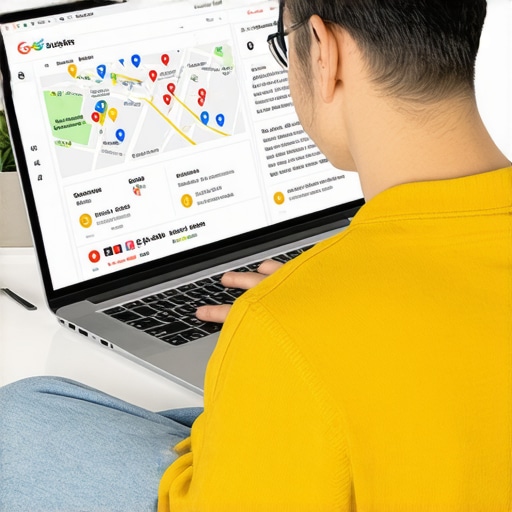 >Many local business owners believe that simply verifying their Google My Business (GMB) profile and adding some basic information will guarantee top rankings in Anaheim and surrounding areas. However, in my experience, this is a dangerous myth. The truth is, there’s a nuanced, often overlooked layer to maps optimization that can make or break your visibility. For instance, focusing solely on keyword stuffing your profile or uploading high-quality images without addressing underlying technical issues can be a waste of effort and budget. Advanced SEO professionals understand thatGoogle’s algorithms consider a complex web of factors, including user engagement metrics, local citations consistency, and even subtle factors like profile activity signals. An example: many overlook the importance of detecting and fixing inconsistencies across all online platforms, which Google uses to verify the authenticity of your business. Falling into common traps, like neglecting regular GMB audits or ignoring local review management, can be detrimental.
A common misconception is that Maps rankings are purely a product of your physical proximity to potential customers. While proximity is a key element, recent updates in Google Maps’ local search algorithm emphasize the role of relevance and authority. This means your business’s reputation, review signals, and on-page local SEO strategies play vital roles. For instance, leveraging local keywords within your Google posts or strategically acquiring reviews mentioning your city or neighborhood can boost relevance.
Have you ever fallen into this trap? Let me know in the comments.
Advanced practitioners also consider the impact of Google Maps filters, which can unintentionally hide your business if not properly managed. Navigating these filters requires a strategic approach, including ensuring your business information aligns perfectly across directories and avoiding spammy tactics that could flag your profile. For deeper insights, check out our detailed guide on [maps optimization in Anaheim](https://anaheimlocalseo.com/maps-optimization-anaheim-win-local-search-battles) to learn about troubleshooting filters and securing top spots effectively.
Maintaining a vibrant online presence through effective maps optimization isn’t a one-and-done task; it demands consistent effort, the right tools, and a strategic approach. Over the years, I’ve honed a toolkit that keeps me ahead in Anaheim and Orange County’s competitive local SEO landscape. These instruments aren’t just software; they’re integral to my workflow, enabling me to identify issues early, monitor changes, and execute precise fixes that drive long-term results.
How do I maintain my Maps Optimization over time?
Firstly, I rely heavily on Google My Business audit tools. Regular checks help me catch errors like missing categories, inaccurate hours, or unverified profiles before they impact rankings. Manual audits are crucial, but automation speeds up the process—allowing me to focus on resolving issues rather than hunting for them.
Next, I leverage BrightLocal’s Citation Tracker to keep tabs on my business citations across platforms. Consistency in NAP details is the foundation of trust for Google, and this tool alerts me to discrepancies or duplicate listings—common culprits behind local ranking drops. Ensuring citations align with my GMB profile is an ongoing task, and this tracker makes it manageable.
For monitoring local reviews, I turn to OpenAI-powered review management software. Positive reviews are gold, and responding promptly signals activity and engagement to Google. Automating review alerts ensures I never miss an opportunity to thank customers and build my reputation naturally.
Visual consistency matters too. I use Canva Pro’s image scheduler to regularly update storefront photos and service images. Authentic visuals combined with strategic posting boost profile activity, which recent studies suggest influences local pack visibility. Plus, fresh content encourages customers to engage and leave reviews, fueling your local SEO momentum.
Lastly, I keep an eye on algorithm shifts with SEO news aggregators and Google updates. Being proactive rather than reactive is key, especially with Google’s continuous algorithm tweaks—like those documented by search engine experts Search Engine Land. A recent change emphasized the importance of profile activity signals, making regular posting and review responses more crucial than ever.
Incorporating these tools into your routine can dramatically improve your maps optimization sustainability. I challenge you to pick one tool from this list—like the citation tracker—and dedicate time each week to it. Small, consistent efforts compound over time, leading to enduring dominance in your local market.
Throughout my journey with local SEO, one of the most enlightening lessons was realizing how much I was overlooking subtle yet powerful signals that Google uses to rank Anaheim businesses. I experienced firsthand how small tweaks—like fixing inconsistent NAP details or leveraging local keywords strategically—could dramatically shift my visibility. These insights weren’t found in generic guides; they came from deep experimentation and understanding Google’s evolving algorithms. Embracing a mindset that constantly questions and tests your strategies is key to staying ahead in Anaheim’s competitive local scene.
The Secret Sauce: Lessons from My Personal Map Optimization Wins and Fails
One of my biggest lightbulb moments was discovering how crucial regular GMB audits are—beyond initial setup. I learned that even minor mistakes, like unverified profiles or outdated categories, can silently sabotage rankings. By implementing monthly checks and integrating tools like GMB error checklists, I started catching issues before they impacted my leads. It’s these proactive habits that truly make a difference in maintaining top spots in Anaheim maps.
Another personal revelation was the importance of authentic, high-quality images. Rather than simply uploading random photos, I focused on capturing genuine storefront shots and service moments. This not only enhanced user trust but signaled activity to Google, boosting my profile’s relevance. Combining visual content with local reviews mentioning specific neighborhoods created a compelling profile that Google couldn’t ignore. These are the on-the-ground tactics that transformed my local SEO approach.
Getting Real with Your Maps Strategy: My Top Resource Picks
If you’re serious about elevating your Anaheim business, I recommend focusing on a handful of tools that have a proven track record with local SEO. Firstly, GMB audit tools help keep your profile error-free, saving you time and frustration. For citation management, BrightLocal’s Citation Tracker ensures NAP consistency across platforms. When it comes to reviews, managing them with review software automates responses and highlights opportunities for engagement. Lastly, using Canva Pro’s image scheduler keeps your profile visually active without stress. These resources collectively form a powerful toolkit for sustainable local map dominance.
Keep Moving Forward: The Power of Small, Consistent Actions
The road to local SEO mastery isn’t paved through one big move but through consistent, intentional effort. I challenge you to pick one tool or tactic from this list and integrate it into your weekly routine. Over time, these small steps compound into a significant competitive advantage—becoming the difference between your Anaheim business thriving and remaining unnoticed. Remember, Google rewards persistence and authenticity, so keep refining, testing, and engaging with your local customer base. Your future success depends less on fleeting hacks and more on building a resilient, optimized presence in Anaheim’s maps — start today and stay committed to the process.

![3 Anaheim SEO Habits Killing Your Traffic [2026 Checklist]](https://anaheimlocalseo.com/wp-content/uploads/2026/04/3-Anaheim-SEO-Habits-Killing-Your-Traffic-2026-Checklist-512x400.jpeg)
![Stop Your Anaheim Map Ranking From Tanking in 2026 [3 Fixes]](https://anaheimlocalseo.com/wp-content/uploads/2026/04/Stop-Your-Anaheim-Map-Ranking-From-Tanking-in-2026-3-Fixes-512x400.jpeg)